
There’s something undeniably special about a vintage home. The architectural details, craftsmanship and character tell a story that simply can’t be replicated in new construction. But loving an older home doesn’t mean you have to live in the past!
The secret to updating a historic home is knowing what to preserve, what to reinvent and where to introduce a little unexpected personality. With the right balance, vintage charm and modern luxury can coexist beautifully.
We recently had the pleasure of transforming a charming 1920s home in Dallas’ historic Lakewood neighborhood. Our goal? Honor its architectural heritage while creating a fresh, sophisticated interior that reflects the homeowners’ personalities and the way they live today.
Here’s how we made vintage feel fresh—and how you can, too!

Portfolio: Vintage Charm Meets Modern Luxury
1. Honor the Architecture, Not the Era
One of the biggest mistakes in updating an older home is trying to make everything look brand new. Original architectural details, interesting millwork and distinctive room proportions are often what give these homes their soul.
Rather than erasing those characteristics, use them as the foundation for your design. The goal isn’t to recreate a 1920s interior, but to celebrate its history through a more contemporary lens.
In our Lakewood project, we embraced the home’s traditional character while introducing a colorful, eclectic New Traditional aesthetic. The result feels authentic to the architecture without being stuck in a particular decade.
Designer Tip: Preserve the architectural elements that make your home distinctive, then introduce contemporary furnishings, lighting and finishes to create a beautiful contrast between old and new.

2. Give Traditional Color a Fresh Perspective
Who says historic homes have to be filled with muted neutrals and predictable palettes?
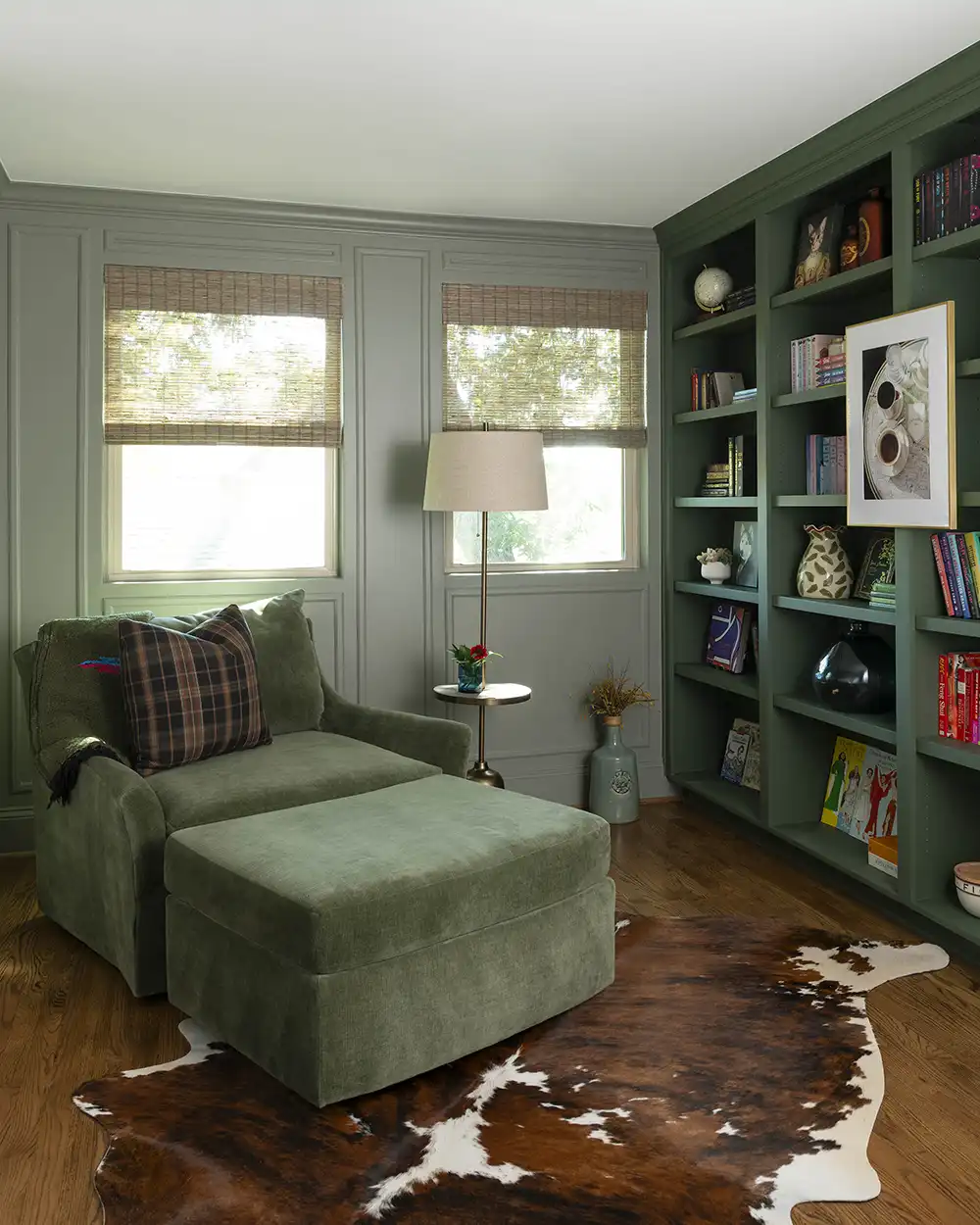
Rich, saturated colors can make traditional architecture feel incredibly current. Deep blues, moody greens, warm jewel tones and unexpected pops of color bring energy and sophistication to vintage spaces.
For our Lakewood revival, we developed a deep, luxurious color palette that carries throughout the home. Each room has its own distinct personality, yet the colors work together to create a natural sense of flow.
The key is balance. A bold wall color might be complemented by softer upholstery, while a vibrant fabric can become the star against a more subdued backdrop.
Designer Tip: Don’t be afraid of color! A thoughtfully developed palette can make an older home feel more inviting, cohesive and distinctly personal.
3. Layer Patterns, Textures & Trimmings
If there’s one thing we love about New Traditional design, it’s the opportunity to layer!
Beautifully patterned fabrics, decorative trimmings, luxurious textures and distinctive wallcoverings add the richness that makes a home feel collected rather than decorated all at once.
In this project, we had a blast combining multiple prints, sumptuous fabrics and exquisite details. The interplay of color, scale and texture creates visual interest while giving every space its own identity.
And don’t overlook the finishing touches. A beautifully tailored pillow, contrasting welt or unexpected trim can elevate an otherwise simple piece into something truly special.
Designer Tip: When mixing patterns, vary their scale. Pair a large floral or geometric print with smaller complementary patterns, then introduce solids and textures to give the eye a place to rest.

4. Make Historic Spaces Work for Modern Living
Charm is wonderful, but functionality is essential!
Older homes weren’t always designed around today’s lifestyles, entertaining habits or storage needs. Thoughtful interior design should improve how a home functions without compromising its architectural integrity.
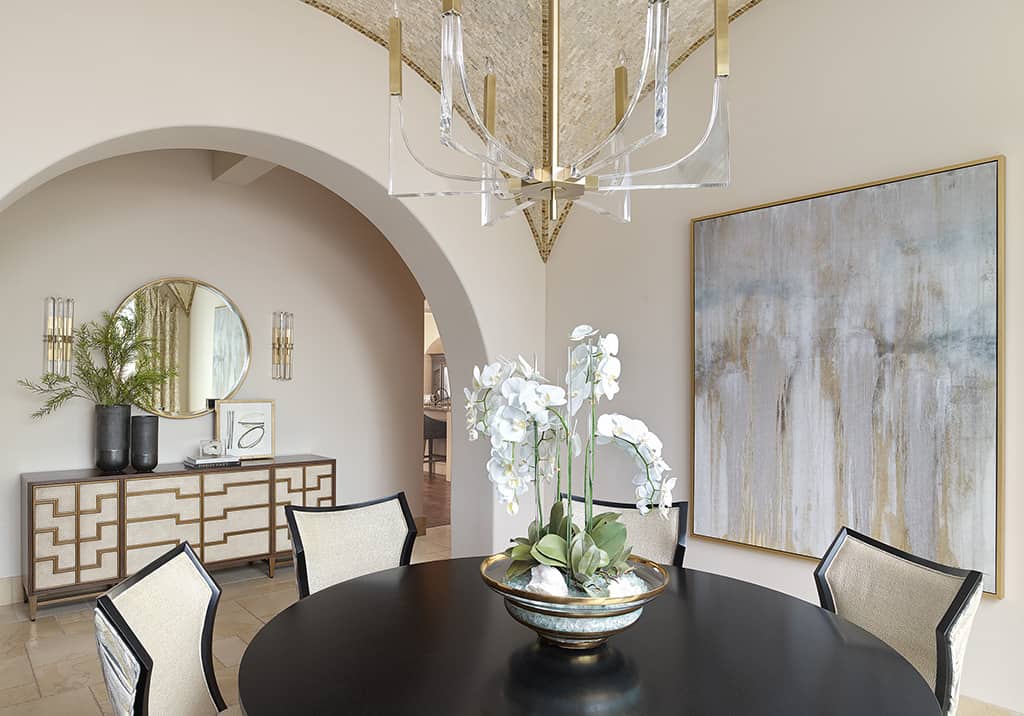
In our Lakewood home, a cavernous entry presented an exciting opportunity. Rather than allowing the generous space to remain underutilized, we introduced a beautiful new bar that transformed it into a functional entertaining destination.
The addition creates an immediate wow factor for arriving guests while making the space far more useful for the homeowners. Paired with a statement chandelier, the entry now sets the tone for the entire home.
It’s a perfect example of how an older home’s unique proportions can inspire something extraordinary.
Designer Tip: Look for underutilized spaces that could serve a new purpose. A generous hallway, unused formal room or oversized entry might become a bar, intimate lounge, library or entertaining space.

5. Introduce Unexpected Design Moments
One of the best ways to keep vintage interiors from feeling dated is to surprise the eye.
A sculptural chandelier, playful wallcovering or contemporary lighting installation can create an exciting contrast against traditional architecture.
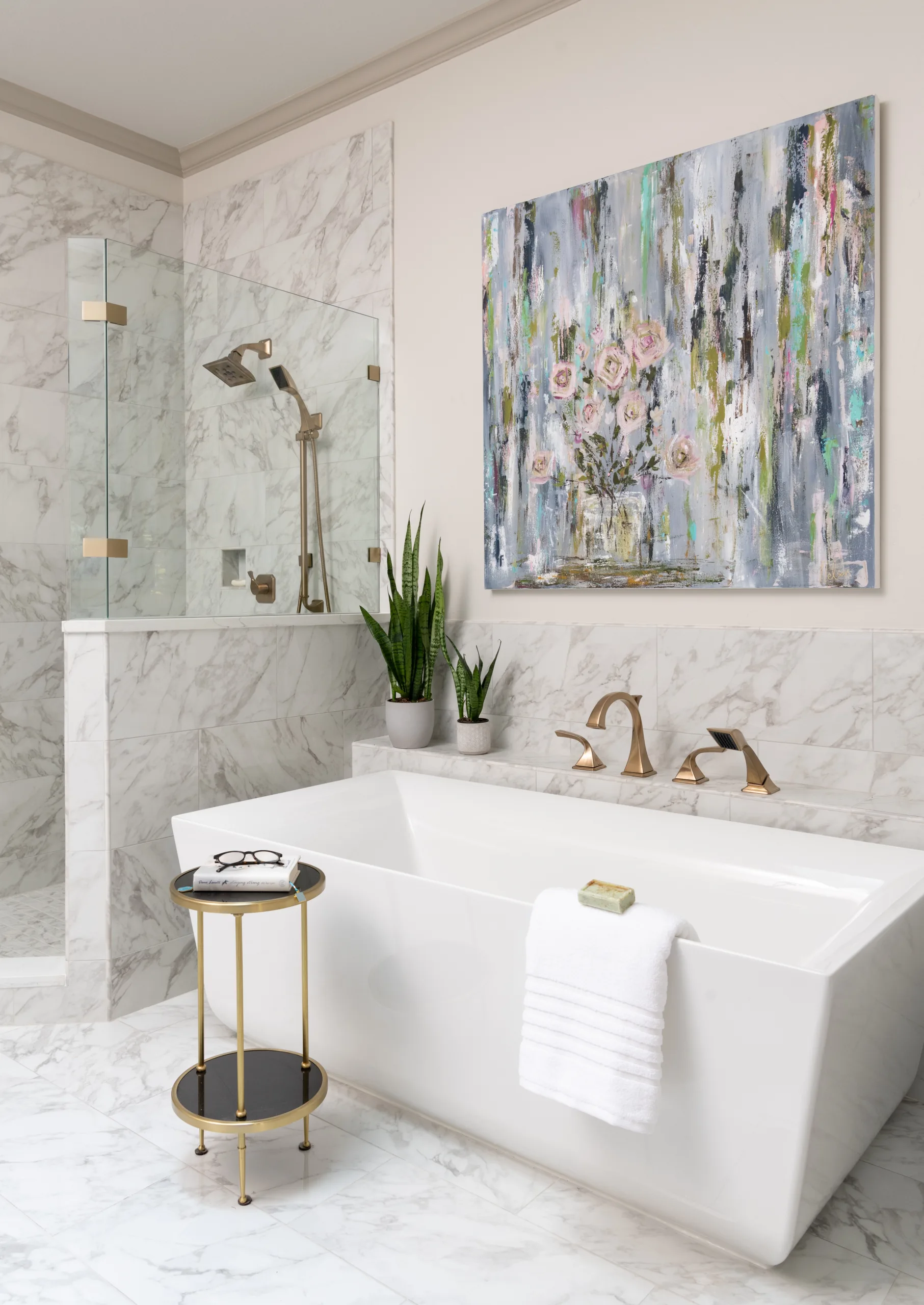
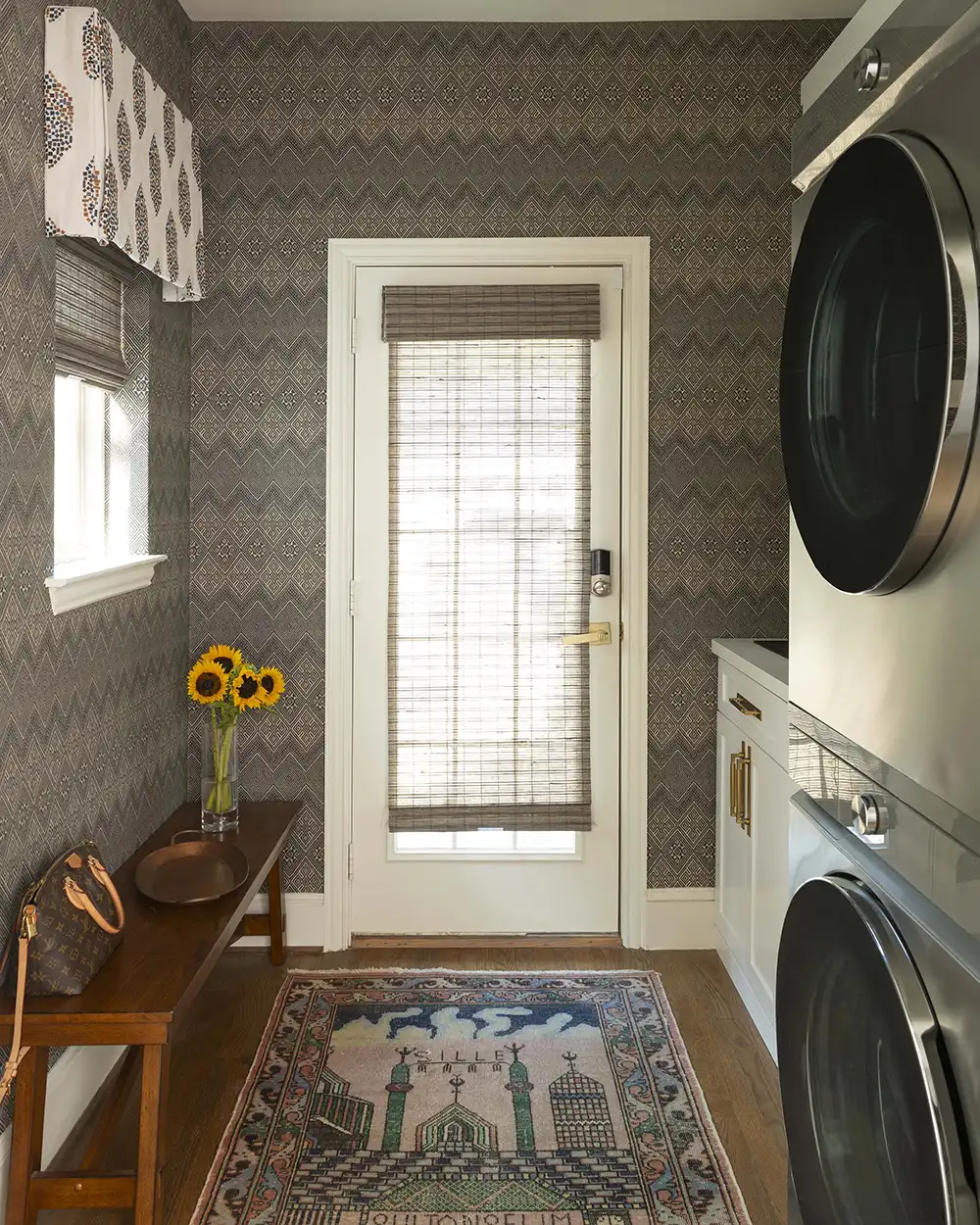
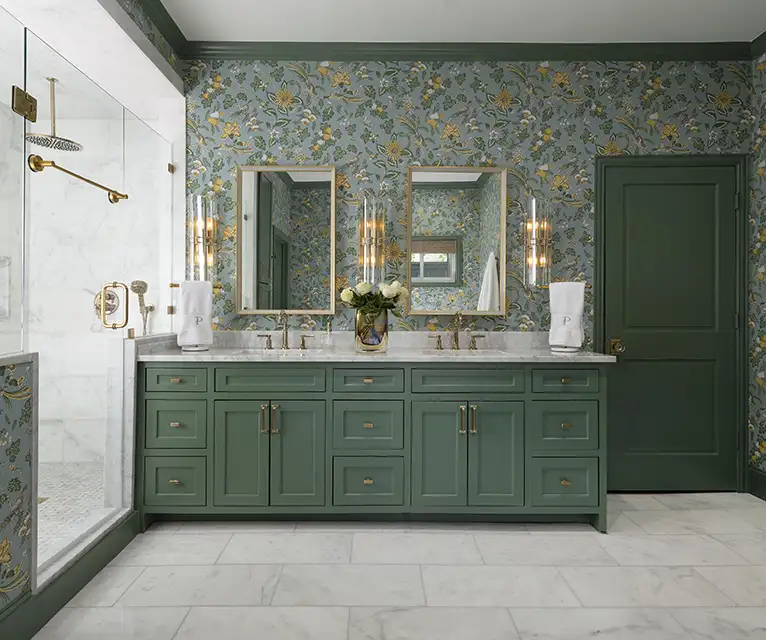
Throughout our Lakewood project, we incorporated distinctive moments that bring personality to every corner. Dancing pendant lights add movement and whimsy to the primary suite, while an unexpected wallcovering makes the utility room anything but ordinary. In the guest bathroom, an anthropological-inspired pattern adds another delightful layer of visual interest.
These unexpected elements keep the home feeling fresh, spirited and anything but predictable.
Designer Tip: Every room deserves a focal point, but not every focal point needs to be dramatic. Choose one memorable element that adds personality without competing with everything else in the space.
6. Carry the Personality Beyond the Main House
A cohesive design story shouldn’t end at the back door.
Outdoor living spaces, guest quarters and pool houses are wonderful opportunities to extend the home’s aesthetic while introducing a little more freedom and fun.
Just steps from the main house, our Lakewood project’s pool house became a colorful cabana with its own distinct personality. Complete with an ensuite bathroom, this charming retreat offers a stylish place to change, relax or freshen up between dips in the pool.
It’s playful, practical and perfectly connected to the spirit of the main home.
Designer Tip: Let secondary spaces have a little extra personality! A pool house, powder bath or guest suite is an ideal place to experiment with bolder colors, unexpected patterns or statement finishes.
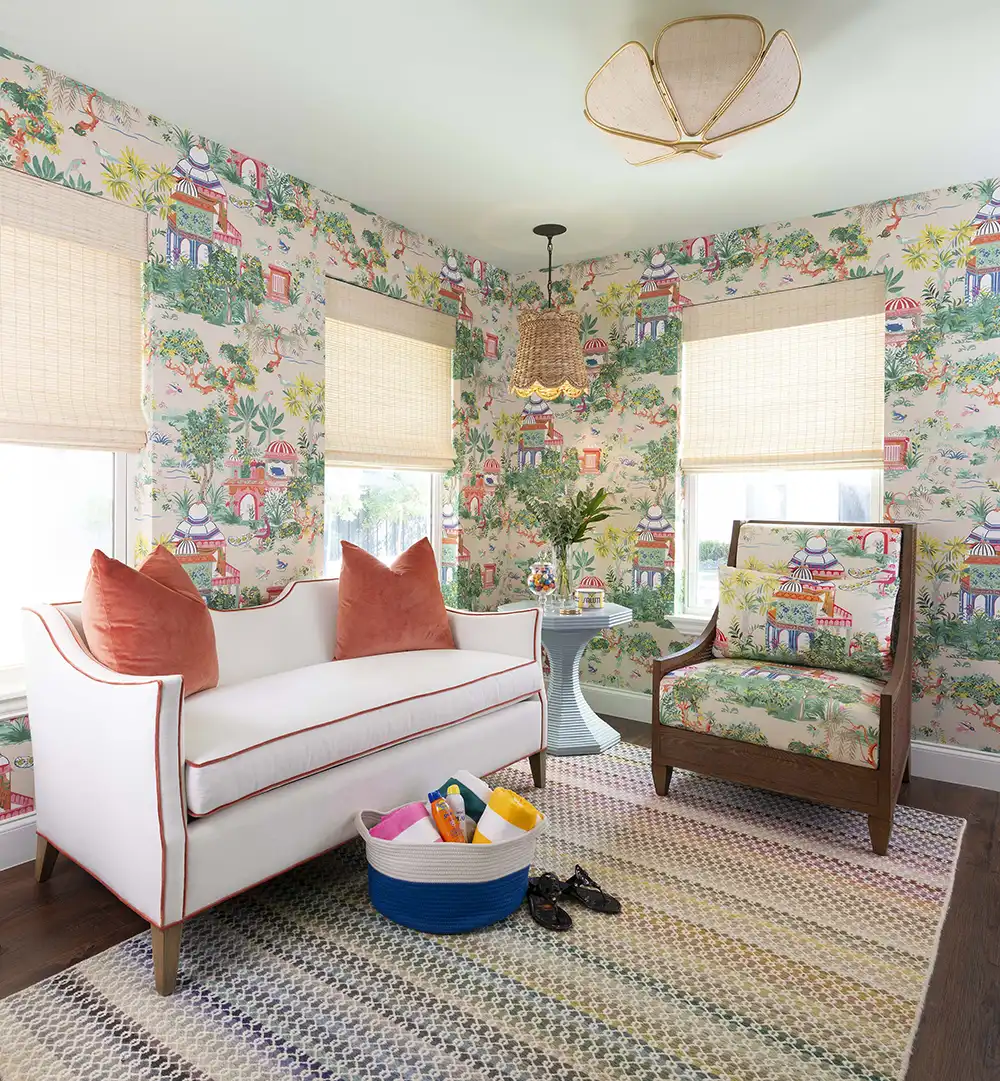
7. Create Cohesion Without Making Every Room Look Alike
One of the greatest challenges in designing an older home is creating a consistent aesthetic across rooms that may have very different architectural features and functions.
Cohesion doesn’t mean repetition. In fact, some of the most beautiful homes are those where every room has a distinct personality, yet everything feels like it belongs together.
We touched nearly every room in this Lakewood residence, carefully balancing color, pattern, materials and furnishings to establish a natural flow. The spaces are individually memorable, but together they tell one beautiful story.
The result is a home that practically wraps you in a warm hug the moment you enter, while offering something unexpected around every corner.
Vintage Charm, Modern Luxury and a Whole Lot of Personality
The beauty of a historic home lies in its character, but the magic happens when that character is thoughtfully reimagined for today.
Our Lakewood revival proves that vintage doesn’t have to mean dated, traditional doesn’t have to mean predictable and luxury certainly doesn’t have to mean formal.
By preserving what makes an older home special, introducing rich color and layered details, improving functionality and embracing unexpected design moments, you can create a home that feels timeless, fresh and uniquely yours.
At Nicole Arnold Interiors, we believe the most successful interiors honor the architecture, reflect the people who live there and make every space meaningful.
Whether you’re renovating a historic Dallas home or simply looking to refresh a traditional interior, we’d love to help you bring its next chapter to life.
Frequently Asked Questions

Let’s Make Your Dream Project a Reality!
Schedule a consult for your next home or commercial interior design project today!
Subscribe to Our Newsletter
Get interior design inspiration and tips delivered straight to your inbox.
"*" indicates required fields
Free Downloads